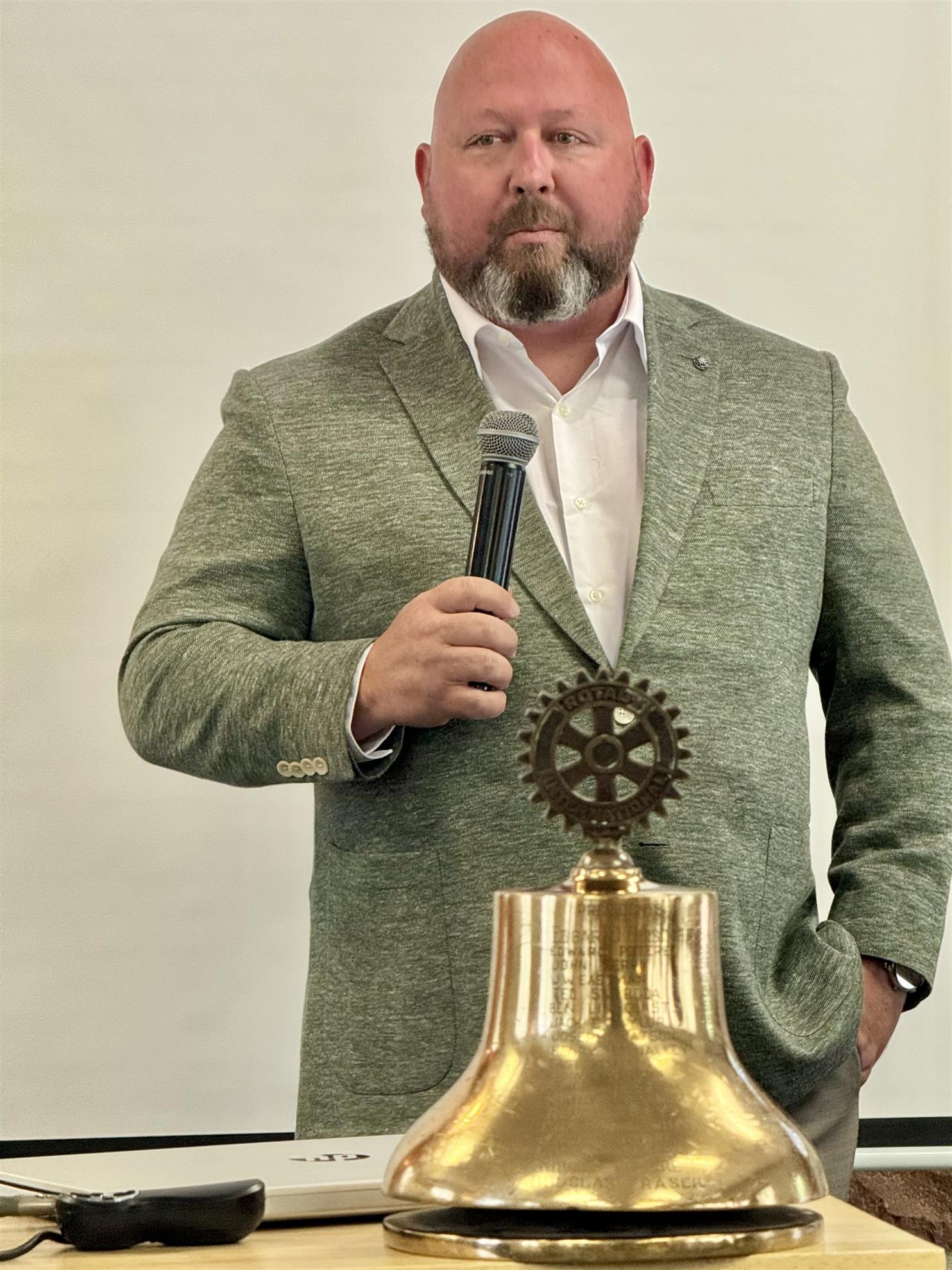
 Finding Purpose Beyond the Uniform
Retired U.S. Army Sergeant Kevin Kidder delivered a heartfelt and inspiring presentation. The author of The Invisible Veteran: Rediscovering Purpose, Identity, and Connection, Kidder, shared his personal journey from military service to civilian life, offering insights that resonated far beyond the veteran community.
He began with an intentional moment of silence, explaining that it reflected what many veterans experience when they remove the uniform for the last time.
"For years," he said, "everything has purpose. You know what to wear, where to be, what your mission is, and who you're serving alongside. Then one day, all of that structure disappears."
After serving more than 20 years as a military police officer, with deployments to Kosovo, Iraq, Afghanistan, and Europe, Kidder expected civilian life to bring freedom. Instead, he discovered uncertainty.
That experience led him to write The Invisible Veteran. What began as a 60-page journal written while his wife was away on a business trip became a deeply personal manuscript. After a difficult move to Arizona, an unexpected job loss, and what he described as the most fervent prayer of his life, Kidder received an encouraging phone call from his pastor, who urged him to pursue writing. Soon afterward, a publisher accepted his manuscript and helped transform it into a full-length book.
Although written through the eyes of a veteran, Kidder emphasized that the book speaks to anyone facing a major life transition, retirement, divorce, career changes, or any circumstance that leaves a person wondering, "Who am I now?"
His presentation centered on three essential ingredients for navigating life's transitions: purpose, identity, and connection.
Purpose, he explained, is often handed to service members every day. Civilian life requires creating that purpose for yourself. "When the structure is gone," he said, "you have to decide what gets you out of bed each morning."
Identity can be equally challenging. For years, Kidder displayed military memorabilia throughout his home because he feared people would forget he had served. It took nearly five years before he realized his identity wasn't found in a uniform but in the person he had become. Today, only one military shadow box remains on display, a reminder of his service, not his entire identity.
Finally, Kidder spoke about the importance of connection. Military life naturally creates close-knit teams and lifelong friendships. Civilian life requires intentional effort to build those same relationships. His advice was simple but powerful: listen more than you speak, reach out to people who may be struggling, and never underestimate the impact of a phone call or text message.
One mentor told Kidder, "I see more in you than you see in yourself." Those words helped change the course of his life and ultimately inspired the work he does today through his writing, speaking engagements, and nonprofit efforts supporting veterans.
Kidder concluded with a reminder that applies to all of us: everyone wants to be seen, heard, and valued. Whether someone is leaving military service, retiring from a career, or simply facing a difficult season of life, purpose, identity, and meaningful relationships are what help us move forward.


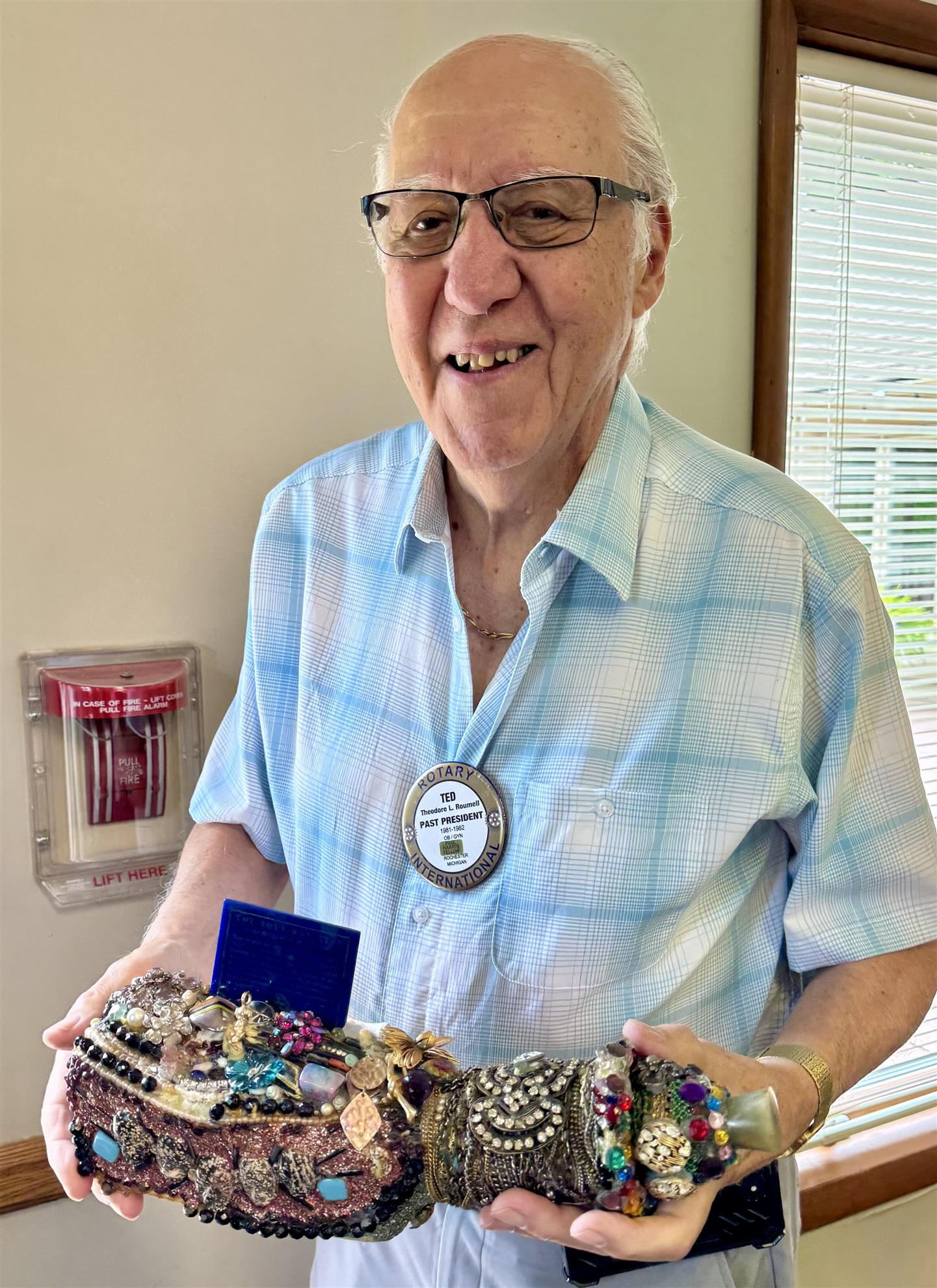 Shani Stadnika, potential member, passed the Rotarian of the Week to Ted Roumell, who joined on August 5, 1968!
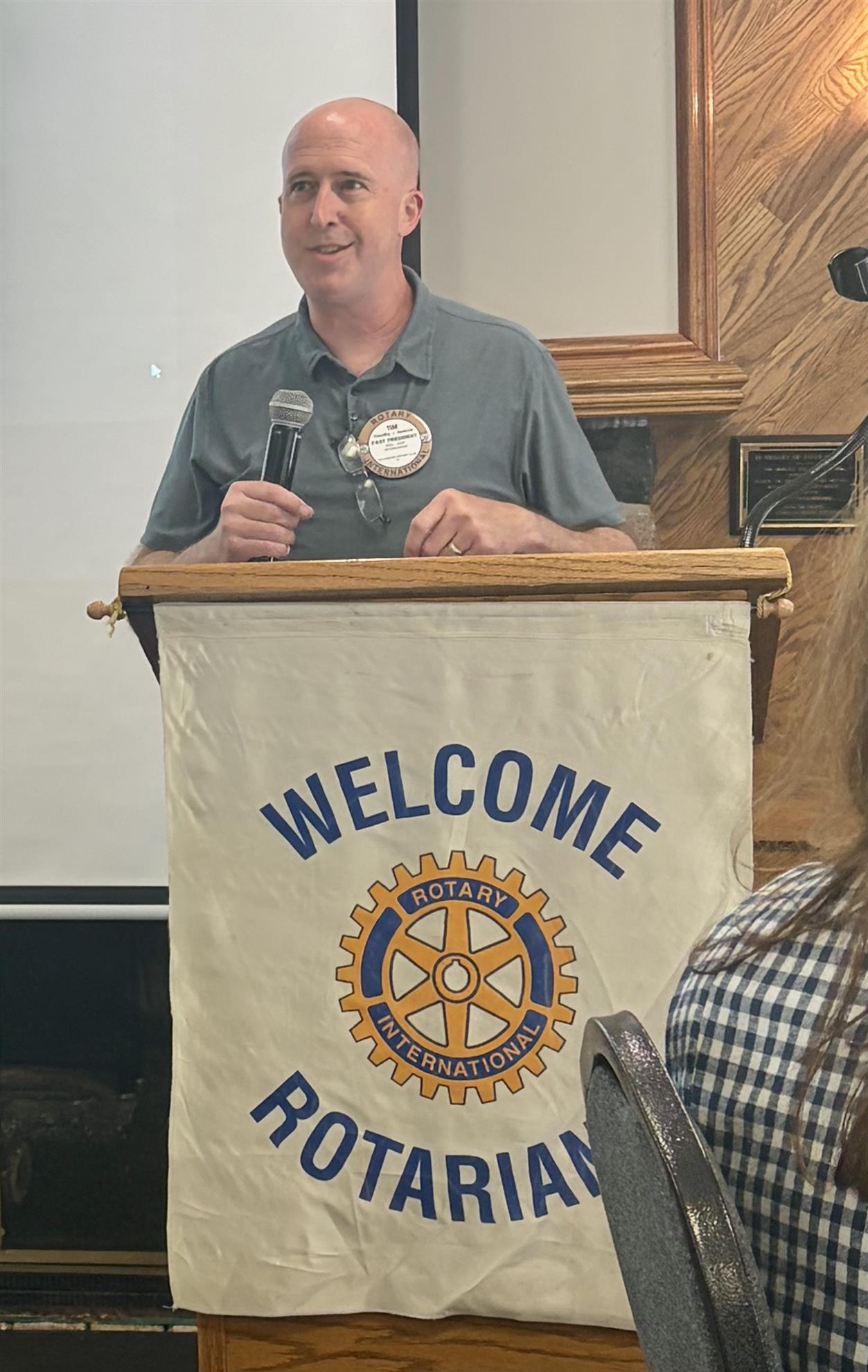 Tim Duncan returned from a wonderful week in Maine, where the entire family, including the pets, enjoyed quality time together. Judging by Tim's smile, the lobster rolls may have been the highlight of the trip!
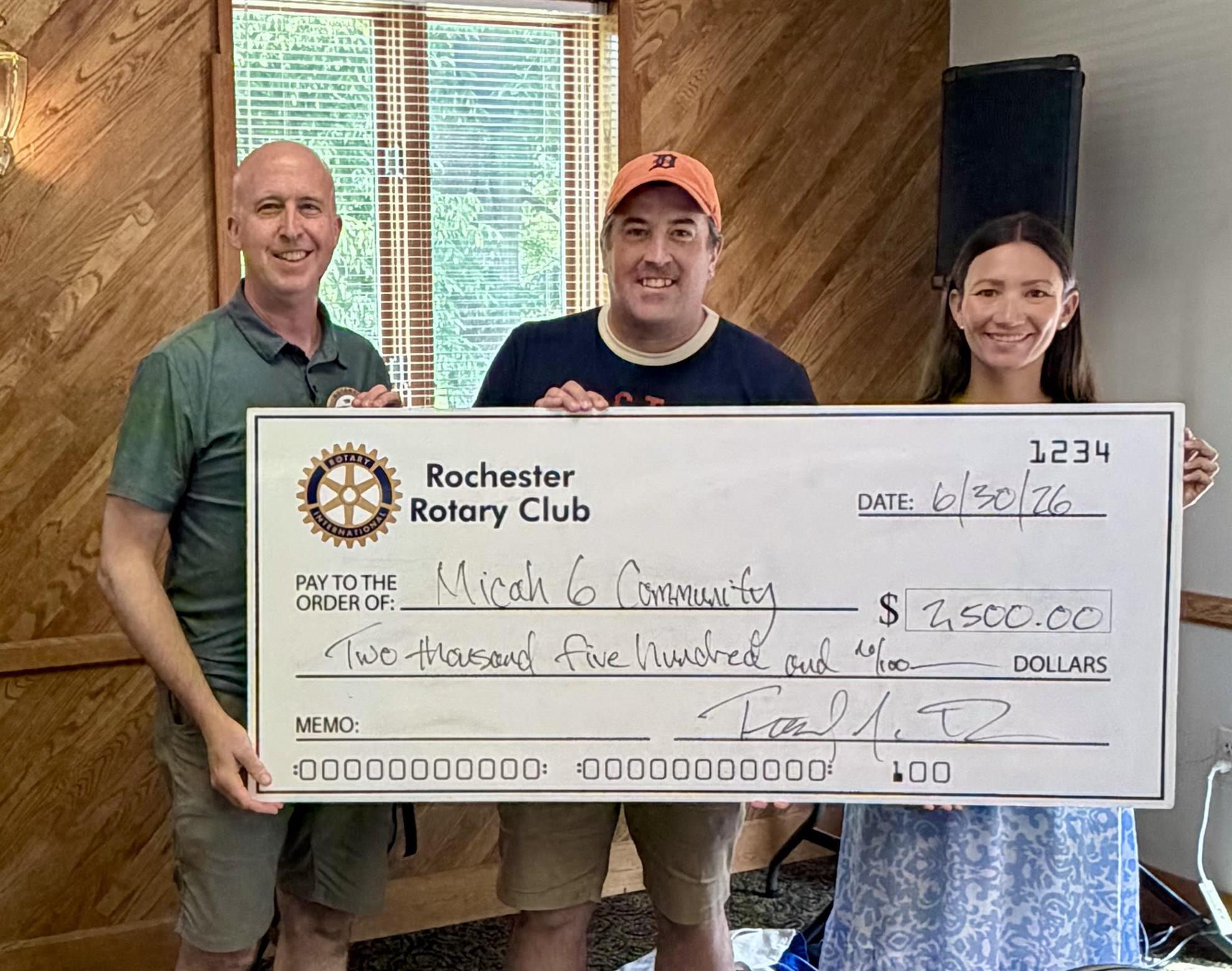 The meeting began with the presentation of a $2,500 Charities grant to Micah 6. Executive Director Coleman Yoakum and Ashley McKenna were on hand to accept the check. The funds will support
  Club members also voted to approve a $5,000 donation to the